

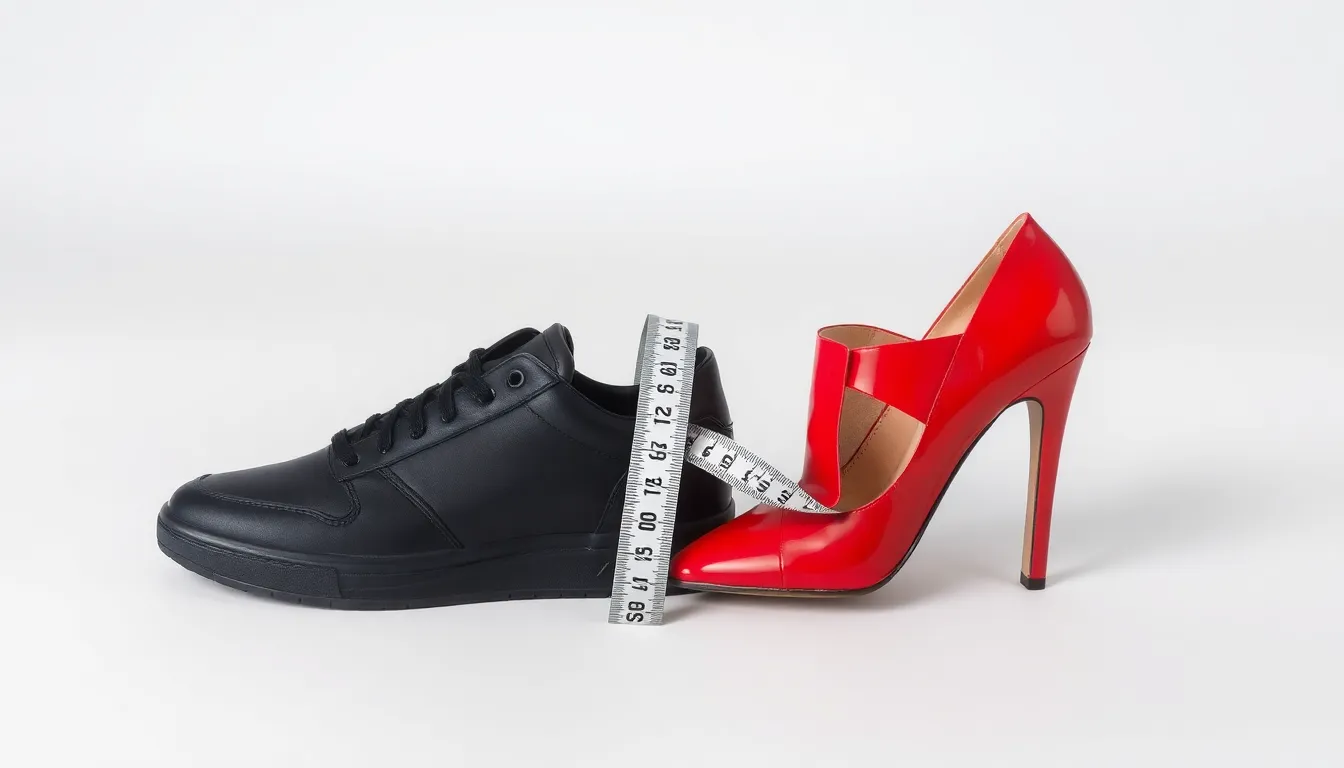
Navigating the world of shoe sizes can be a daunting task, especially when it comes to converting men’s sizes to women’s. Many people find themselves confused by the differences in sizing systems, often leading to frustration when shopping for footwear. Understanding these variations is essential for making informed choices and ensuring a comfortable fit.
Men’s and women’s shoe sizes aren’t directly interchangeable, but with a little knowledge, anyone can master the conversion. This guide breaks down the key factors involved in determining the right size, helping shoppers find the perfect pair of shoes without the hassle. Whether you’re buying for yourself or looking for a gift, knowing how to convert sizes can make all the difference in achieving style and comfort.
Understanding Shoe Sizes
Shoe sizes vary significantly between men and women, leading to common confusion. Recognizing these differences is crucial for selecting properly fitting footwear.
Differences Between Men’s and Women’s Shoe Sizes
Men’s and women’s shoe sizes operate on distinct scales. Men’s sizes typically run larger, with a difference of about 1.5 to 2 sizes. For instance, a men’s size 10 corresponds to a women’s size 11.5 or 12. This discrepancy arises from anatomical differences between male and female feet, including width and volume. It’s essential to consult size charts or conversion guides when determining sizes.
| Men’s Size | Women’s Size |
|---|---|
| 7 | 8.5 |
| 8 | 9.5 |
| 9 | 10.5 |
| 10 | 11.5 |
| 11 | 12.5 |
Importance of Accurate Sizing
Accurate sizing enhances comfort and overall foot health. Ill-fitting shoes can lead to various issues, such as blisters, calluses, or foot pain. Ensuring a thorough understanding of one’s size promotes better purchasing decisions. When shopping for women’s shoes using men’s sizes, testing for fit through trying on is advisable. This practice minimizes discomfort and maximizes satisfaction with footwear choices.
Converting Men’s Shoe Sizes to Women’s

Converting men’s shoe sizes to women’s sizes involves understanding the standard sizing differences and various influencing factors. This guide provides clarity on conversions and specific charts to assist shoppers.
Standard Conversion Chart
| Men’s Size | Women’s Size |
|---|---|
| 6 | 7.5 |
| 7 | 8.5 |
| 8 | 9.5 |
| 9 | 10.5 |
| 10 | 11.5 |
| 11 | 12.5 |
| 12 | 13.5 |
The chart displays a conversion of men’s shoe sizes to their corresponding women’s sizes. For example, a men’s size 9 translates to a women’s size 10.5. This general guideline aids shoppers in selecting the correct fit.
Factors Affecting Size Conversion
- Foot Shape: A range of foot shapes—narrow, wide, or flat—can impact the overall fit of a shoe. These differences may necessitate size adjustments.
- Brand Variations: Different brands often employ unique sizing standards. While one brand might conform to standard conversions, another may differ slightly, requiring additional consideration when shopping.
- Footwear Type: The intended use of the footwear, such as athletic versus casual shoes, could influence the fitting experience. Athletic shoes sometimes require a more snug fit due to performance needs.
- Material and Design: The flexibility and design of shoes also play a crucial role in fit. Materials that stretch, like leather or mesh, may allow for a more forgiving fit, while rigid designs might not accommodate sizing discrepancies as well.
These factors must be considered for ensuring proper shoe fit and comfort. Being informed leads to enhanced satisfaction with footwear purchases.
Choosing the Right Fit
Finding the right shoe fit involves careful consideration of multiple factors. Proper sizing maximizes comfort and promotes foot health.
Tips for Trying on Shoes
- Measure both feet: Feet can differ in size, so measure both to ensure an accurate fit.
- Test in-store: Walk around in the shoes to assess comfort. Check for tightness or pinching at the toes.
- Wear the right socks: Use the same type of socks as those intended for the shoes to replicate the actual fit.
- Check width: Pay attention to width, as some brands offer wide or narrow options for a personalized fit.
- Look for support: Ensure proper arch support and cushioning for enhanced comfort during wear.
Common Sizing Mistakes to Avoid
- Ignoring size charts: Always refer to size conversion charts instead of solely relying on numbered sizes.
- Choosing size based on previous purchases: Different brands may have unique sizing; verify size for each brand.
- Underestimating foot swelling: Feet can swell throughout the day, so try shoes later in the afternoon for an accurate fit.
- Skipping a size up: When in doubt about fit for specific footwear types, consider going half a size up for added comfort.
- Rushing the process: Take time to ensure the right fit. Ill-fitting shoes can lead to discomfort and long-term foot issues.
Popular Styles by Gender
Understanding popular footwear styles helps shoppers make informed choices when navigating men’s and women’s sizes. Fashion trends and brand offerings can significantly influence style preferences and conversions between gender sizes.
Fashion Trends in Men’s and Women’s Footwear
Men’s footwear trends often emphasize versatility and functionality. Styles such as sneakers, loafers, and boots dominate the market. Sneakers frequently feature bold designs and athletic functionalities, appealing to consumers prioritizing comfort and aesthetics. Loafers offer a classic, polished look, perfect for both casual and formal occasions. Boots provide durability and style, catering to outdoor and urban environments.
Women’s footwear trends tend to embrace a balance of style and comfort. Popular styles include heels, flats, and sandals. Heels often vary in height and design, adding elegance to outfits. Flats emphasize comfort without sacrificing style, making them ideal for daily wear. Sandals, particularly during warmer months, showcase various designs, from casual flip-flops to chic strappy sandals.
Brands Offering Unisex Options
Several brands focus on unisex footwear, bridging the gap between men’s and women’s styles. Notable brands include:
- Nike: Offers a range of athletic shoes in unisex sizes, appealing to a broad audience.
- Adidas: Features various streetwear and performance styles that cater to all genders.
- Vans: Known for its timeless sneakers, Vans provides unisex options that emphasize casual comfort.
- Converse: Offers iconic styles like the Chuck Taylor All Star, available in unisex sizing.
These brands prioritize inclusivity, allowing consumers to choose styles based on personal preference rather than gender designation.
Navigating the world of shoe sizes can be tricky for many. By understanding the conversion from men’s to women’s sizes and considering key factors like foot shape and brand variations, shoppers can make informed choices.
Taking the time to measure feet accurately and consult size charts ensures a better fit and greater comfort. Whether exploring trendy styles or classic designs, knowing how to convert sizes can enhance the overall footwear experience.
Ultimately, prioritizing comfort and fit leads to healthier feet and greater satisfaction with every step.

