

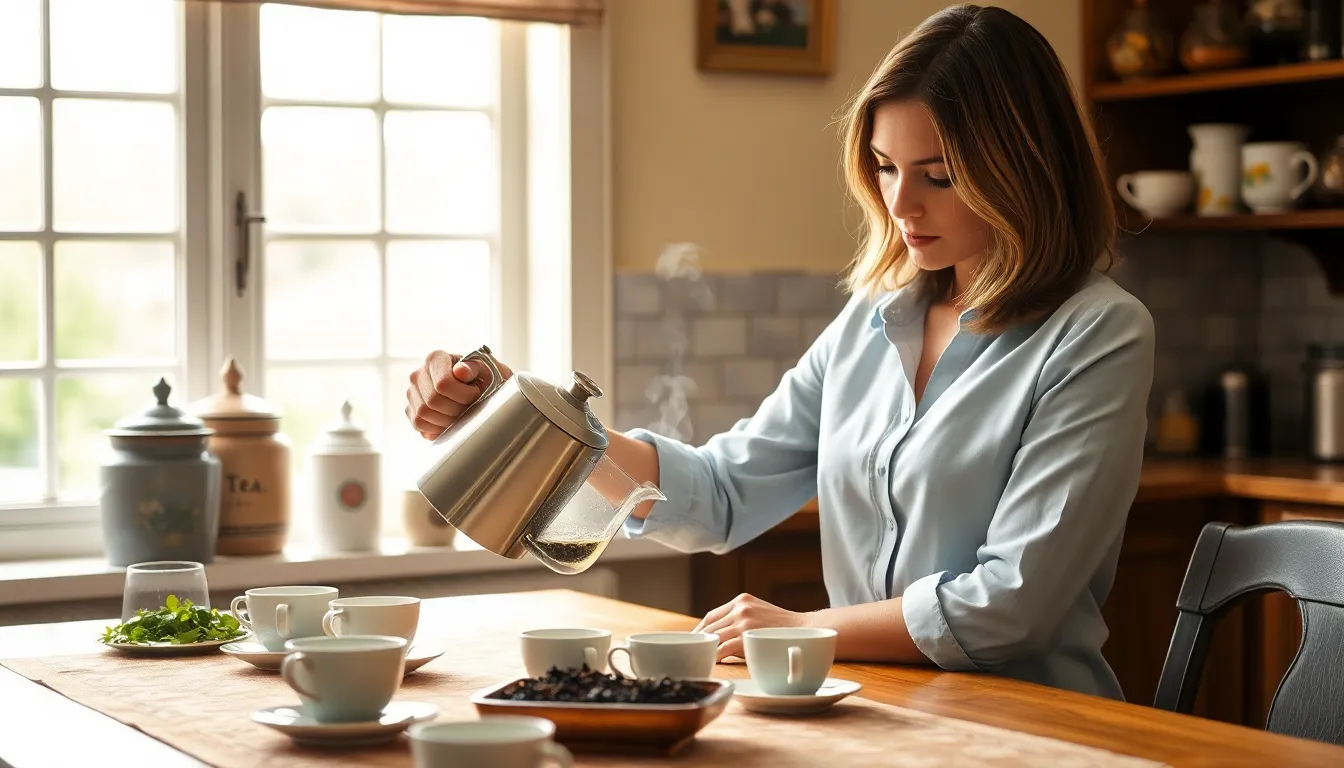
Steeping tea is an art that transforms simple leaves into a flavorful and aromatic beverage. It’s not just about boiling water and adding tea; it’s a delicate process that requires attention to time, temperature, and technique. Understanding what it means to steep tea can elevate one’s tea-drinking experience, revealing the nuances of different types and blends.
When tea leaves are steeped, they release essential oils, flavors, and nutrients into the water, creating a unique infusion. This process can vary significantly depending on the type of tea being used, whether it’s black, green, or herbal. By mastering the steeping process, tea enthusiasts can unlock a world of taste and health benefits, making each cup a delightful journey.
Table of Contents
ToggleUnderstanding The Concept Of Steeping Tea
Steeping tea transforms simple leaves into a rich beverage. This process relies on specific principles that enhance flavor and aroma.
The History Of Tea Steeping
Tea steeping dates back thousands of years, believed to have begun in ancient China around 2737 BC. Legends suggest Emperor Shen Nong discovered tea when leaves accidentally fell into boiling water. Over centuries, steeping methods evolved, varying by culture and preference. By the Tang dynasty (618–907 AD), brewing techniques became more refined, leading to distinct styles of tea across Asia. The introduction of porcelain teapots during the Ming dynasty (1368–1644) allowed for better temperature control, enhancing steeping efficiency. Today, steeping remains a global tradition, celebrated in diverse forms like British afternoon tea and Japanese tea ceremonies.
The Science Behind Steeping
Steeping involves a complex interaction between water and tea leaves. Heat facilitates the release of essential compounds, including polyphenols, catechins, and amino acids. These elements contribute to flavor, color, and health benefits. Optimal steeping temperatures vary:
- Black tea prefers 200°F to 212°F
- Green tea benefits from 160°F to 180°F
- Herbal tea thrives at higher temperatures, around 212°F.
This precision maximizes extraction while minimizing bitterness. Steeping time also impacts the infusion; typically, two to five minutes suffices for most teas. Mastering these variables enables tea enthusiasts to achieve the ideal cup tailored to personal taste.
Types Of Tea And Their Steeping Requirements
Different types of tea require specific steeping times and temperatures to extract their unique flavors and benefits. Understanding these requirements enhances the overall tea experience.
Black Tea
Black tea commonly steeps at temperatures between 200°F and 212°F (93°C to 100°C). The optimal steeping time ranges from 3 to 5 minutes for a balanced flavor. Longer steeping can lead to astringency, while shorter times may yield a weaker taste. Popular varieties include Assam and Darjeeling.
Green Tea
Green tea typically steeps at lower temperatures, around 160°F to 180°F (71°C to 82°C). Steeping time should be between 2 to 3 minutes to maintain its delicate flavors. Over-steeping can cause bitterness, compromising the intended profile. Common varieties include Sencha and Dragon Well.
Herbal Tea
Herbal tea steeping varies based on the blend, but a general guideline is to use boiling water, 212°F (100°C), and steep for 5 to 7 minutes. Herbal teas, such as chamomile or peppermint, benefit from longer steeping times to fully extract flavors and benefits.
Factors That Influence Steeping
Several key factors influence the steeping process, including water temperature, steeping time, and tea leaf size. These elements play a crucial role in determining the flavor profile and overall quality of the brewed tea.
Water Temperature
Water temperature significantly impacts the extraction of flavors from tea leaves. Each type of tea requires a specific temperature range for optimal results. For example, black tea thrives in water between 200°F and 212°F (93°C to 100°C), which allows for robust flavor extraction. In contrast, green tea should steep in cooler water, specifically between 160°F and 180°F (71°C to 82°C), to retain its delicate taste. Herbal teas often require boiling water at 212°F (100°C) to fully release their complex flavors. Using the appropriate temperature ensures that the nuances of each tea variety emerge effectively, enhancing the drinking experience.
Steeping Time
Steeping time directly affects the strength and flavor of the tea. For black tea, a steeping time of 3 to 5 minutes yields a rich and bold infusion. Green tea, however, benefits from a shorter steeping period of 2 to 3 minutes, which allows it to maintain its gentle characteristics. Herbal teas typically require longer steeping times of 5 to 7 minutes to extract their full range of flavors and benefits. Monitoring steeping time is essential; over-steeping can lead to bitterness, while under-steeping may result in a weak brew.
Tea Leaf Size
Tea leaf size also influences the steeping outcome. Whole leaves provide a gradual release of flavors, requiring longer steeping times. Conversely, smaller tea leaves or dust release their essential oils more quickly, allowing for a shorter steeping duration. For example, loose-leaf teas generally enhance flavor complexity, while tea bags may yield a quicker infusion with a less nuanced taste. Choosing the right leaf size contributes to achieving the desired flavor and aroma, aligning with steeping preferences.
Common Misconceptions About Steeping Tea
Several misconceptions exist around steeping tea, often leading to less-than-ideal brews. Understanding these misunderstandings clarifies the art of steeping and enhances the overall tea-drinking experience.
Oversteeping Vs. Understeeping
Oversteeping occurs when tea is left to infuse longer than recommended. This results in bitter flavors and astringency, particularly in black and green teas. Conversely, understeeping happens when tea is not brewed for the appropriate duration, leading to weak and flavorless infusions. Each type of tea, including herbal varieties, has specific steeping times that optimize flavor extraction. For example, black tea typically steeps for 3 to 5 minutes, while green tea requires just 2 to 3 minutes. Balancing steeping time is essential for achieving a rich, satisfying cup.
The Role Of Tea Quality
Tea quality significantly impacts the steeping process and final flavor. Lower-quality teas often use dust or fannings, which brew quickly but may lack depth and complexity. Higher-quality whole leaves, however, provide nuanced flavors and require more time to steep for optimal extraction. The source and processing of the tea also play crucial roles; for instance, teas produced from young, tender leaves often yield a more aromatic brew. Thus, investing in quality tea enhances the overall steeping experience and ensures a more flavorful beverage.
Mastering the art of steeping tea can transform a simple drink into a delightful ritual. By paying attention to time temperature and technique tea lovers can unlock a world of flavors and health benefits. Each type of tea offers its own unique characteristics requiring specific steeping practices to achieve the best results.
Investing time in understanding these nuances not only enhances the tea-drinking experience but also fosters a deeper appreciation for this ancient beverage. Whether one prefers the robust flavors of black tea or the delicate notes of green tea the right steeping method can make all the difference. Embracing these principles will surely lead to a more enjoyable and fulfilling tea journey.

