

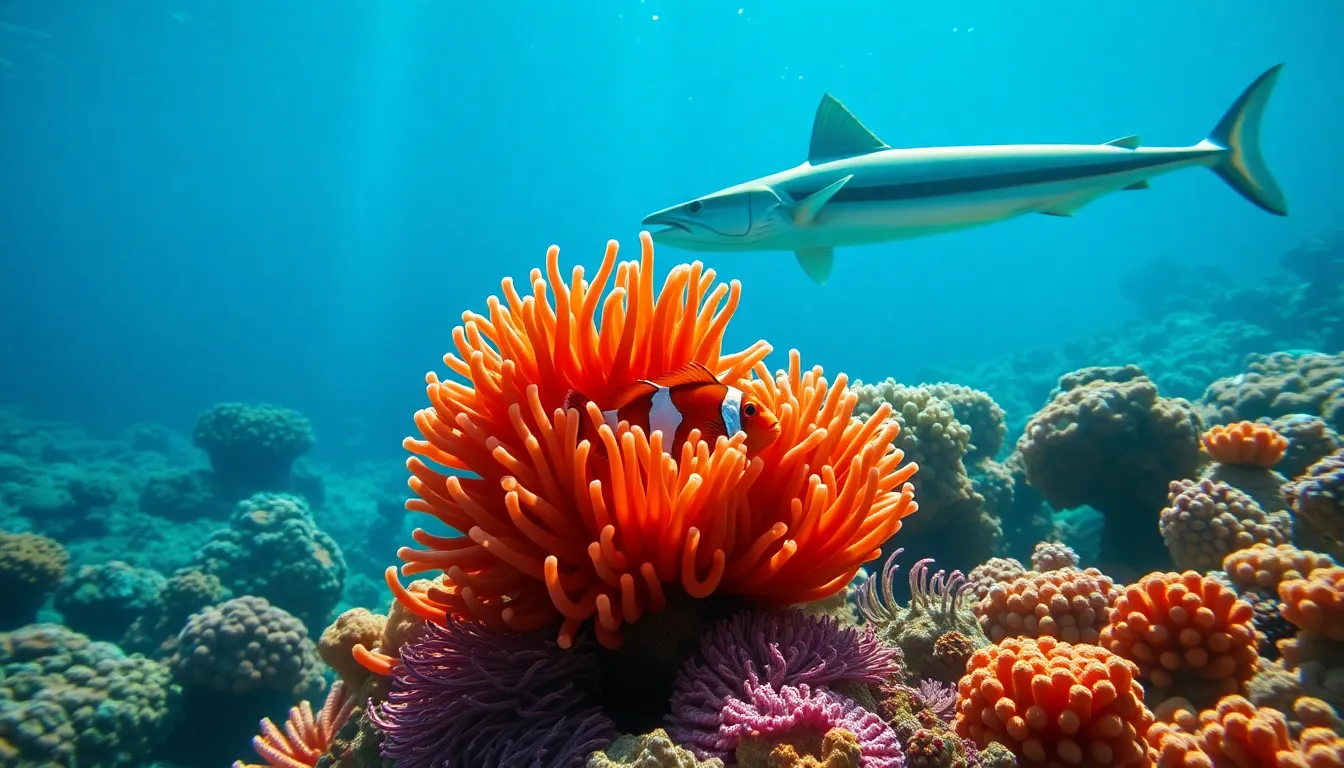
In the vibrant world of coral reefs, the relationship between predator and prey unfolds in fascinating ways. Barracudas, known for their sleek bodies and sharp teeth, often evoke curiosity about their dietary habits. Among the many species they might encounter, clownfish and their eggs present an intriguing question: do barracudas actually feast on clownfish eggs?
Clownfish, with their bright colors and symbiotic relationships with anemones, are beloved by many. However, their eggs, laid in clusters near their protective homes, may not be safe from hungry barracudas. Understanding this dynamic can shed light on the delicate balance of marine ecosystems and the survival strategies of these iconic fish. Exploring whether barracudas target clownfish eggs reveals not just dietary preferences but also the intricate web of life beneath the waves.
Table of Contents
ToggleOverview of Barracudas
Barracudas are large, predatory fish known for their streamlined bodies and impressive speeds, which can reach up to 36 miles per hour. They inhabit tropical and subtropical oceans worldwide, often found in shallow waters near coral reefs. These fish thrive in diverse underwater environments and exhibit a carnivorous diet consisting mainly of smaller fish and crustaceans.
Barracudas possess sharp teeth and strong jaws, enabling them to quickly capture prey. Their keen eyesight allows them to spot potential meals from a distance, making them effective hunters. Barracuda species, such as the great barracuda (Sphyraena barracuda), can grow up to 6 feet in length, showcasing their capability as apex predators in marine ecosystems.
Barracudas typically engage in solitary or small group hunting, targeting schools of fish. Their hunting tactics include quick bursts of speed and stealthy approaches toward prey. Understanding the ecological role of barracudas is essential for appreciating the dynamics of predator-prey relationships in coral reef environments.
Clownfish and Their Habitat
Clownfish inhabit warm, shallow waters of the Pacific and Indian Oceans, forming a unique symbiotic relationship with sea anemones. These vibrant fish play a vital role in their marine environments.
Relationship with Anemones
Clownfish seek refuge among sea anemones, which provide protection from predators. In return, clownfish offer nourishment through waste and help anemones thrive by attracting other fish. This mutualistic relationship enhances the survival chances of both species, fostering biodiversity in coral reef ecosystems. Clownfish are resistant to the anemone’s stinging tentacles, allowing them to dwell safely while deterring potential threats.
Breeding and Egg Laying
Clownfish exhibit distinct breeding behaviors, typically laying eggs on flat surfaces near their host anemones. During the breeding season, a female clownfish deposits up to 1,000 eggs, which the male fertilizes. Both parents diligently guard and care for the eggs, ensuring their safety from various predators. The incubation period lasts approximately 6 to 10 days, with the larvae eventually dispersing into the open ocean. This reproductive strategy supports the population sustainability of clownfish within their habitat.
Barracudas and Their Diet
Barracudas are formidable predators in marine ecosystems. Their diet consists primarily of fish and crustaceans, which allows them to play a vital role in controlling prey populations.
Primary Prey Species
Barracudas primarily target smaller fish species, including:
- Mackerel: These fast swimmers provide substantial energy for barracudas.
- Sardines: Sardines, abundant in schools, serve as an easy target.
- Snapper: Snapper, found near reefs, are a preferred prey due to their size and abundance.
- Grunts: Grunts often inhabit the same environments as barracudas, making them frequent captures.
While clownfish are present in the same habitats, they tend to avoid open waters. Barracudas generally do not include clownfish eggs in their diet, as their feeding typically focuses on more abundant, faster-moving prey.
Feeding Behavior
Barracudas exhibit several distinct feeding behaviors:
- Ambush Hunting: Barracudas often lurk near structures like reefs, waiting to surprise prey.
- Speed and Agility: Known for their speed, barracudas can reach up to 36 miles per hour, aiding in the capture of swift prey.
- Group Hunting: Occasionally, barracudas hunt in small groups. This tactic increases their success rate against larger schools of fish.
Barracudas rely on their keen eyesight and sharp reflexes during hunts. This behavioral adaptation enhances their efficiency as apex predators in coral reef ecosystems.
Do Barracudas Eat Clownfish Eggs?
Barracudas do not typically prey on clownfish eggs, favoring other smaller fish. Understanding their feeding habits and ecological interactions helps clarify the relationship between these species.
Evidence and Observations
Research indicates that barracudas primarily target faster fish such as mackerel, sardines, and snapper. Observational studies in coral reef environments support this, showing barracudas displaying ambush and speed-based hunting techniques. While clownfish inhabit similar areas, their protective relationship with sea anemones and the location of their eggs often keep them safe from barracuda predation. Documented instances of barracudas consuming clownfish, including their eggs, remain rare, reinforcing the idea that barracudas focus on other, more suitable prey.
Impact on Clownfish Population
The lack of predation pressure from barracudas on clownfish and their eggs plays a critical role in maintaining clownfish populations. Effective parental care exhibited by clownfish, including guarding eggs laid near host anemones, further protects against potential threats. This dynamic enhances clownfish reproductive success, contributing positively to their ecological presence in coral reef systems. The stable interaction between barracudas and clownfish exemplifies a balanced ecosystem, where barracudas fulfill roles as apex predators without significantly impacting clownfish populations.

